
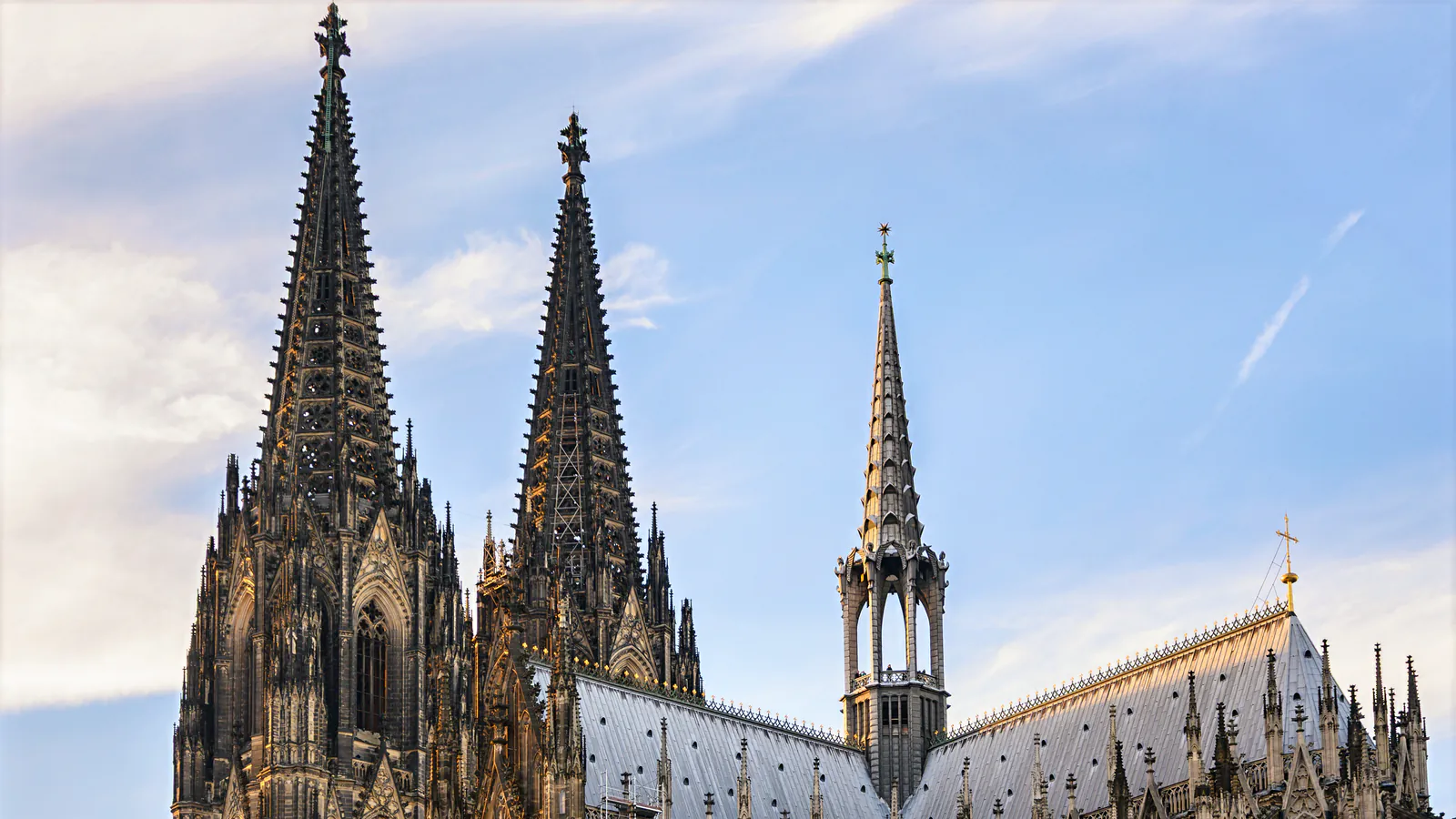
- Location
- Cologne, Germany
- Period
- 1248–1880
A brief timeline
Construction began in 1248, proceeded in stages, and was completed only in 1880. UNESCO highlights an unusual continuity: nineteenth-century builders followed the medieval form and spirit rather than recasting the cathedral as a different age’s building.
Architecture and art
Twin spires, a five-aisled plan, and the height of the choir create a forceful High Gothic rhythm. The interior retains a monolithic high altar, early fourteenth-century choir stalls, pillar statues, and an exceptional cycle of medieval stained glass.
A living church
Beside one of the city’s busiest transport hubs, the cathedral remains the liturgical church of the Archdiocese of Cologne. Its long construction shows that Christian heritage endures through both stone and the community that continues to use and care for it.
If you visit, remember that this is first a place of worship: check the official liturgical schedule, keep silence, and respect the local community.