
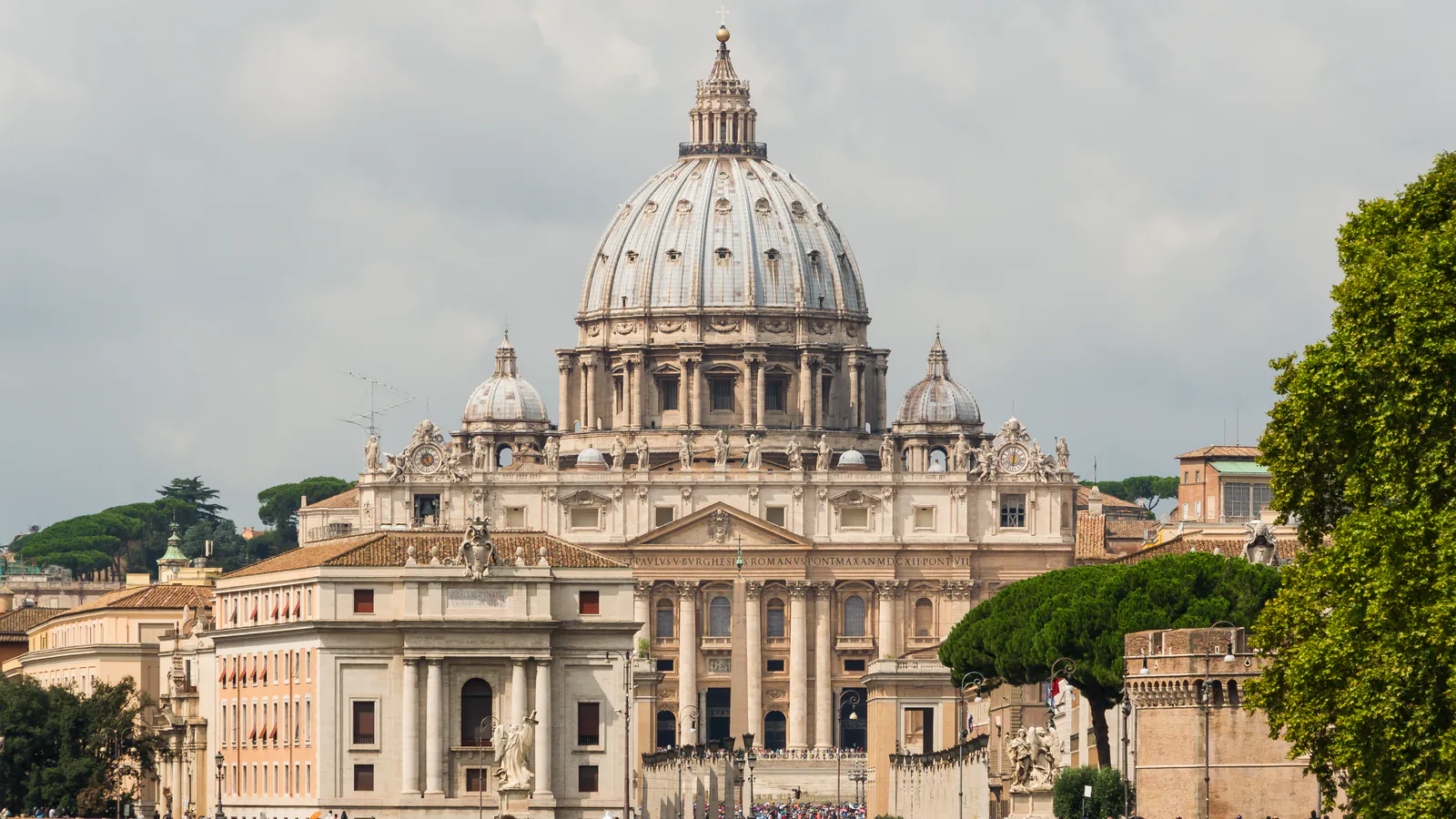
- Location
- Vatican City
- Period
- 1506–1626
A brief timeline
Pope Julius II laid the first stone of the present basilica in 1506; it was completed in 1626, replacing Constantine’s earlier church. Several major architects carried the project across more than a century while keeping the tomb of Saint Peter at its center.
Architecture and art
Michelangelo shaped the dome, Carlo Maderno completed the façade, and Bernini designed the square and its welcoming colonnade. Inside, the Pietà and the baldachin are more than masterpieces: both direct attention toward the mystery celebrated at the altar.
A living church
It is not Rome’s cathedral, but it is a papal basilica and one of Catholicism’s great pilgrimage destinations. Liturgy, prayer near Saint Peter’s tomb, and pilgrims from every people continue to define the building.
If you visit, remember that this is first a place of worship: check the official liturgical schedule, keep silence, and respect the local community.